We all know that the Wright brothers hold the title for first in flight – on December 17, 1903 Wilbur and Orville Wright made the first sustained and controlled human flights – but for this post let’s clear the air about some of the fallacies I just watched in a “documentary” on Netflix last night (it aired on NatGeo on June 1, 2015). Even though the viewer is given the following warning, I fear that many will not heed it.
“This program includes dramatizations inspired by history. Some events have been altered for dramatic purposes.”
Instead of outlining each of the incorrect statements or over dramatizations, I’ll just outline the basic story of these three incredible American engineers and innovators.
The rivalry between the Wright brothers and Curtis mostly began after the Wrights filed for (and won) a patent lawsuit which asserted their ownership of the skies via motorized plane. Their patent was No. 821,393 for a “flying machine.”
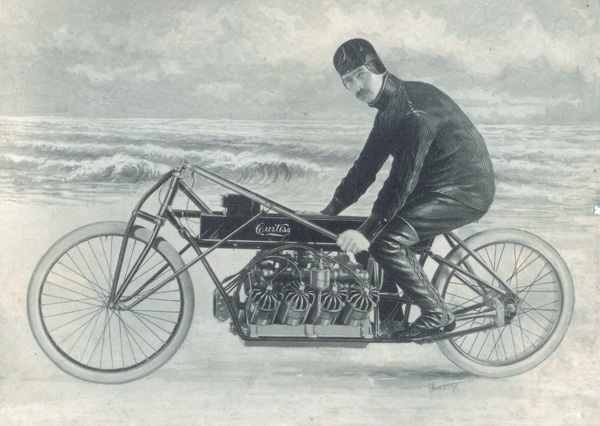
Starting out, Glenn Curtis was a bicycle shop owner (like the Wrights) and probably the best engine mechanic/designer in America at the time. Eventually, Curtiss morphed his bicycles and engines into one, creating powerful motorcycles. “In 1903, on Decoration Day (now called Memorial Day), Curtiss used a V-twin motorcycle to win a hill climb, win a ten-mile race, and set a new one-mile speed record (Langley, 2009, para. 6).” Catching wind of the Wrights flying machine, Curtiss tried to sell his engines to them to be used in their aircraft, but the Wrights refused the business. Instead, Curtiss continued his work on engines and within five years had become known as “the fastest man on earth.” Continue reading “The Wright Brothers and Glenn Curtiss”

 So here’s the scoop. King Yeongjo (grandfather to King Jeongjo), wise enough to see the end of his reign approaching, turned over the daily administration of government to his favorite son, Sado-Seja. Although probably a good idea, the king’s court was split by factionalism.
 It was in 1919 that the Korean people declared their desire for independence from Japan (who had taken over control of their country in 1910). However, it wasn’t until 1945 that the Korean people were finally given their freedom, uniting the country and its citizens.
 The History of Humanity