Field trips bring history to life; they take classroom learning to the next level, where students can touch, feel, and truly ingest content. I love taking students on field trips, and at Desert Christian High School, I have the freedom to do just that!
This month we’ve been discussing the era in American history called Westward Expansion. As a part of our studies in this era, we have explored the reasons for the European migration west. One such reason was missionary work: spreading the word of God to those who had not yet heard it. In Tucson, AZ, where our school is located, we happen to have a missionary church still standing from (actually even before) this era. Founded in 1692 by Father Francisco Kino, San Xavier is quite the historic place to visit.
Mission San Xavier, a part of New Spain, became a part of the new Republic of Mexico in 1821. Mexican material support for missions was non-existent, and in 1837 San Xavier’s last resident missionary in the 19th century departed the premises. Franciscan administration of all missions in the region came to an end in 1843 and secular clergy assumed responsibility for the churches, a circuit-riding Mexican priest visiting San Xavier perhaps once a year until the Mission became a part of the United States in June, 1854 with approval of the Gadsden Purchase.
During our field trip to the mission, students were asked to take photos of the mission and copious notes as the docent spoke. Back home for homework, these photos and notes were to be compiled into a “travel blog post,” whereby their “readers” could gain information about the mission and Father Kino, and see photos of both. Lastly, the students were to add in their recommendation (or not) of the tour and experience of the mission, so that “readers” could determine whether they would also want to visit. Below is a sampling of some excerpts and photos from the student’s “travel blog posts.”
——————— student work below ————————–
 *On October 24, I had the pleasure of visiting, along with my US history class, the aged beauty of the San Xavier Mission. In all of its timeless design and intricate architecture, I could enjoy both design and history in an effortless blend (two developing interests of mine). Father Kino was the founding priest of the San Xavier mission. Though his activity in the mission itself might not have been as directly apparent as some might assume, his actions in establishing San Xavier were significant to US history, or more specifically, westward expansion.
*Father Kino was a man of sacrifice and compassion. He committed his life to the pursuit of the well-being of others. Aside from being the founding priest to the San Xavier Mission, Father Kino contributed much more to the surrounding area. In addition to San Xavier, Father Kino founded 20 other missions, however he never built a church. Hailing from Italy, his dream developed into wanting to become a missionary, and when a traumatic event enveloped his life, causing him to become ill, he cried out to God, swearing that if he recovered he would devote his life to God. Ironically, he only came to the San Xavier church about five or six times at most. He passed away in 1711 and was buried at Magdalena De Kino.
*All in all, I would not only recommend but insist that you find time, or rather make time, to visit the San Xavier Mission. Perhaps during your visit, you might just find a bit of yourself, if you’re lucky. History does not define us, but it does mold us. San Xavier, the church, Father Kino, as ancient as we may perceive them, are also apart of our history and play a certain effect in our modern day, thus when we learn more about history, we delve deeper into our own character and learn more about ourselves. Continue reading “San Xavier Field Trip”

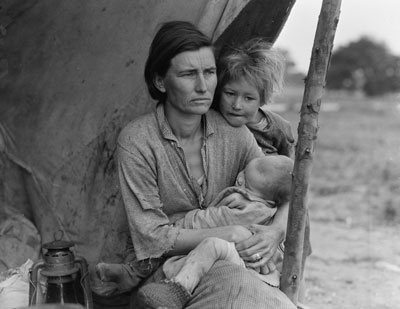 Explore 10 surprising facts about the environmental disaster that ravaged the southern Plains in the 1930s.


 The History of Humanity