Closure

Most teachers know that closure, otherwise called an “exit ticket,” is an essential part of a daily lesson plan. By definition, closure is “a sense of resolution or conclusion at the end of something.” Therefore, at the end of a lesson, when we as teachers have (hopefully) imparted some selection of knowledge from our minds to our students, we would wrap up that knowledge-passing (a lesson) with closure.

According to Brown University, there are multiple purposes for providing closure for students.

  • provide feedback to the teacher about the class;
  • require the student to do some synthesis of the day’s content;
  • challenge the student with a question requiring some application of what was learned in the lesson.

Closure to the lesson does not have to be a long, drawn out process. In fact Continue reading “Closure”

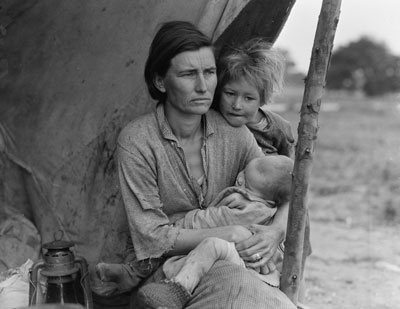
10 Things You May Not Know About The Dust Bowl

Explore 10 surprising facts about the environmental disaster that ravaged the southern Plains in the 1930s.

1. One monster dust storm reached the Atlantic Ocean. While “black blizzards” constantly menaced Plains states in the 1930s, a massive dust storm 2 miles high traveled 2,000 miles before hitting the East Coast on May 11, 1934. For five hours, a fog of prairie dirt enshrouded landmarks such as the Statue of Liberty and the U.S. Capitol, inside which lawmakers were debating a soil conservation bill. For East Coasters, the storm was a mere inconvenience—“Housewives kept busy,” read a New York Times subhead—compared to the tribulations endured by Dust Bowl residents.

For more, please visit this link: http://www.history.com/news/10-things-you-may-not-know-about-the-dust-bowl?cmpid=Social_FBPAGE_HISTORY_20160712_512364655&linkId=26361466

Second Semester Finals

For the 2016/17 second semester final, students were asked to be creative in order to show their knowledge of the terms we learned. These terms spanned the last 100 years of American history. Although I gave them options for their creativity, some students came up with ideas that I hadn’t thought of, such as creating a puzzle or a board game. On the board game, for example, in order to move forward, a question you might be asked is, “What was one cause for the Great Depression?” Other spaces on the board might say, “You fell in love with a flapper. Move back one space.”

Other students created a short video as a team or composed a poem. Here are a few links to some of these projects.

Last but not least, here is a wonderful example of a digital infographic: Second Semester Final

It’s been an awesome first year. Thanks to all my awesome students at Desert Christian High School.