In 1877 prospector Ed Schieffelin dared to search for silver in the San Pedro Valley – a land frequented by hostile Apaches. He had been warned by troopers at the newly established Camp Huachuca, some 20 miles distant, that all he would find would be his own tombstone. That warning inspired the name of his first claim. Two years later, after the influx of miners to the silver rich hills, the miner’s camp became a city known as Tombstone. Schieffelin, having been a prospector since age 17, soon grew restless to explore new country and when offered $300,000 for his claims in 1880, he quickly accepted. He left the now prosperous city he had founded, a rich man. Although wealthy enough to live comfortably for the rest of his life, Schieffelin continued to prospect the West, including Alaska, until his death in Oregon in 1897. –excerpt from the Cochise County Courthouse in Tombstone, AZ.
One of the most famous figures to emerge from the 19th-century history of the American West, Wyatt Earp (1848-1929) was known first and foremost for his participation in a notorious gunfight at the O.K. Corral in Tombstone, Arizona in 1881.Tombstone was booming after a silver rush, and most of the Earp family had gathered there. Virgil was working as the town marshal, and Wyatt began working alongside him. In March 1881, while pursuing a group of cowboys who had robbed a stagecoach, Wyatt struck a deal with local rancher Ike Clanton, who had ties to the cowboys. Clanton soon turned against him, however, and began threatening the Earp brothers. The feud escalated, and finally exploded into violence on October 26, 1881 at the O.K. Corral.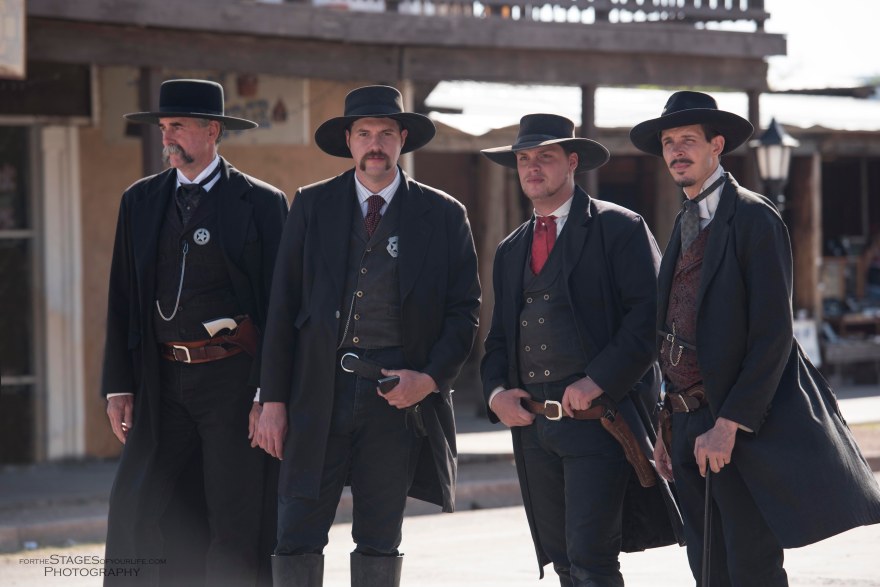 In the gunfight, Virgil, Morgan and Wyatt Earp and Doc Holliday faced off against the Clanton gang (Ike, his brother Billy, and Tom and Frank McLaury). Morgan, Virgil and Holliday were all wounded, but survived; Billy and the McLaurys were killed; and Wyatt Earp escaped without injury. Continue reading “Tombstone!” →



 The History of Humanity